Planned Establishment of an European Zero Emission Corridor
Nextistence in the Media
Source of information and full article – author Brane Janjič, Naš stik:
https://www.nas-stik.si/novice/podrobnosti-novice/napovedana-vzpostavitev-evropskega-koridorja-brez-emisij
This is a cross-border initiative aimed at accelerating the transition to an emission-free energy system along the entire transport corridor from the Adriatic Sea to the Baltic Sea.
The project consortium includes various partners from Austria, Croatia, Germany, and Slovenia, all connected with the development and optimization of climate-neutral technologies.
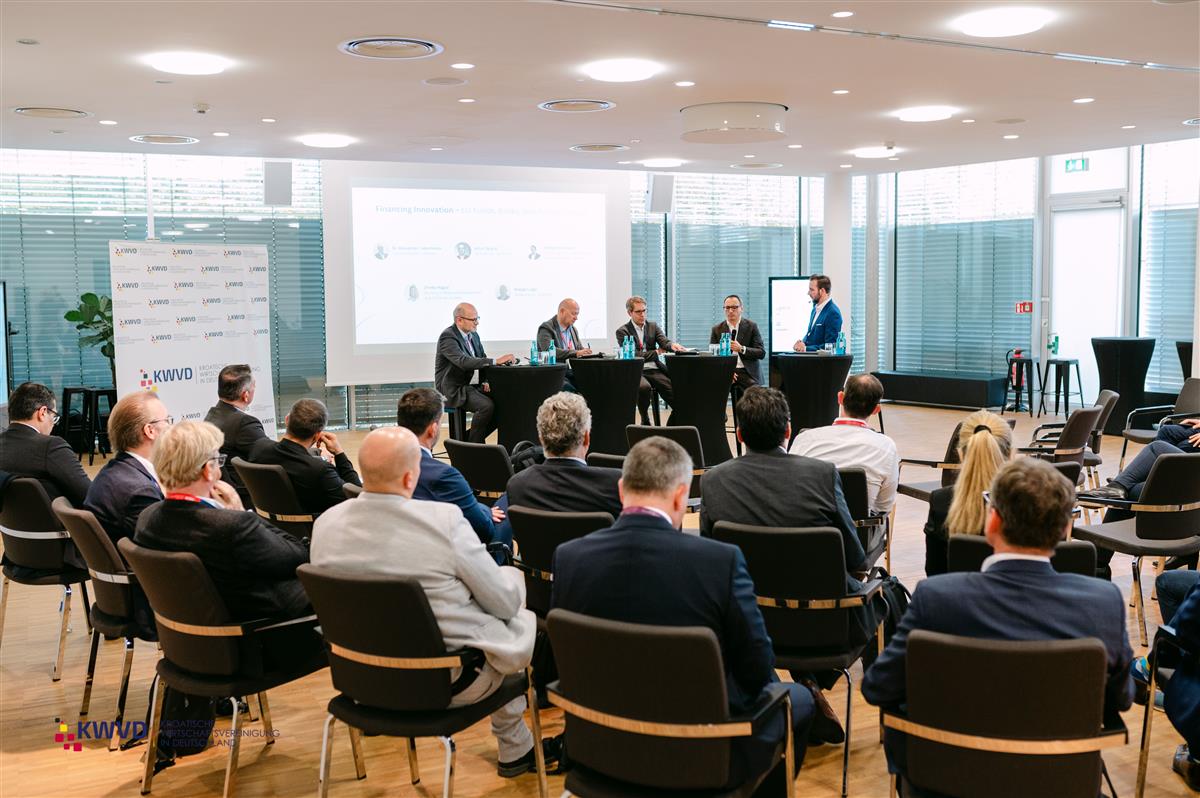
The project for establishing the international Zero Emission Corridor (ZEC) was presented in greater detail at the recent GEO Forum in Frankfurt, attended by numerous representatives from Germany, Slovenia, and Croatia.
At the forum, Slovenian companies and institutions presented technologies, solutions, and examples of good practice. Together with other stakeholders, they also participated in round table discussions focused on exchanging experience, technology transfer and development, future strategic partnerships, and upcoming projects.
Particular interest was generated by the initiative to establish a Zero Emission Corridor from the Adriatic to the Baltic Sea.
The ZEC Project Is Expected to Become Pan-European Over Time
The main goal of the project is to establish an efficient system for the production, distribution, and storage of green hydrogen using wind, solar, and sea wave energy.
The initiators aim to connect all relevant stakeholders and market participants across the European Union, including industrial companies, technology manufacturers, research centers, regulatory institutions, and financial mechanisms.
In addition, the project also foresees the creation of a European curriculum for education and training in hydrogen technologies, which would provide professional training for the future needs of industry and the green hydrogen market.
The initiators are also working toward establishing a hydrogen trading exchange, which would further enable transparent and efficient market integration between producers and consumers of green hydrogen at the European level.
They also plan to develop a platform for power purchase agreements, enabling long-term contracts for electricity generated from renewable sources.
All of this is intended to ensure coordinated and efficient cooperation for faster deployment of green hydrogen technologies, reducing Europe’s dependence on imports and supporting European energy security.
Pilot Project in Pag
The starting element of the wider project is a pilot facility in the Port of Žigljen on the island of Pag – the first in the EU to use sea wave energy for green hydrogen production.
Its objective is to achieve energy self-sufficiency for the city of Novalja by 2030.
Project Coordinators
The project is coordinated by the Croatian Business Association in Germany (KWVD) and the Nextistence Institute from Žalec.
Funding for infrastructure development and pilot project implementation is expected to be secured from various European funds.